Play Tung Tung Sahur: Obby Challenge Online – Free Obby Browser Game
Game Overview
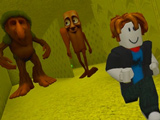
Tung Tung Sahur: Obby Challenge is a obby / parkour browser game built around one clear goal: dash through chaotic parkour stages inspired by viral Italian neuro animals. Its design combines fast, replayable parkour built for short bursts with meme-heavy visuals that keep each fall entertaining, giving every action an immediate purpose. The main interaction appears quickly, so early attempts focus on learning the controls and reading feedback. Later runs reward cleaner timing, better priorities, and a more deliberate route through each objective.
The opening sequence is direct: start by moving with WASD and sprinting with Shift; then time your jumps over gaps and spinning hazards; after that, use the mouse to look around and line up each leap. These actions feed a progression loop where success becomes visible through fast, replayable parkour built for short bursts, meme-heavy visuals that keep each fall entertaining, and great with friends racing side-by-side for the best time. Because decisions connect, rushing can cost more time than it saves. A failed run still reveals useful information about timing, positioning, route choice, upgrade order, or a missed recovery opportunity.
The appeal of Tung Tung Sahur: Obby Challenge comes from how quickly its obby rules create meaningful choices. New players can complete one reliable objective at a time, while experienced players can optimize inputs, chase harder milestones, and make every restart more efficient. It suits players who enjoy fast, replayable parkour built for short bursts, meme-heavy visuals that keep each fall entertaining, and browser games with visible improvement. Sessions can remain casual, but replayable goals and measurable mastery provide a reason to return.
Key Details:
- Genre: Obby / Parkour
- Difficulty Level: Medium to Hard
- Average Play Time: 5–10 minutes
- Best For: players who enjoy fast, replayable parkour built for short bursts, meme-heavy visuals that keep each fall entertaining, and obby challenges
How to Play
Getting Started:
- Start by moving with WASD and sprinting with Shift.
- Time your jumps over gaps and spinning hazards.
- Use the mouse to look around and line up each leap.
- Survive three mistakes or less to clear the course.
- Chase faster runs and compete with friends.
Basic Controls:
- Mouse: Look around.
- Left click: Interact, WASD: Move, Space: Jump, Shift: Run, Tab: Pause.
- Left click: Interact/circle.
- WASD: Move.
- Space: Jump.
Objective: Dash through chaotic parkour stages inspired by viral Italian neuro animals.
Game Features & Highlights
- ✓ Fast, replayable parkour built for short bursts.
- ✓ Meme-heavy visuals that keep each fall entertaining.
- ✓ Great with friends racing side-by-side for the best time.
- ✓ Tight platforming challenges.
- ✓ Multiple trap types to master.
Tips & Strategies
Beginner Tips:
- Learn the trap patterns before attempting speed runs.
- Use sprint strategically—not everywhere.
- Look ahead to prepare for upcoming obstacles.
Advanced Strategies:
- Practice difficult sections individually.
- Race with friends for added motivation.
- Learn one reliable route or action sequence before trying to play faster.
What to Watch Out For:
- Do not rush the opening sequence. The second step—time your jumps over gaps and spinning hazards—is easier after the controls and route feel stable.
- Avoid repeating the same failed approach without a change; use the last attempt to identify whether timing, position, route, or resource use caused the problem.
Game Elements Explained
Movement and Momentum: Translating directional input, jumps, and speed into a controlled route is the purpose of this system. In Tung Tung Sahur: Obby Challenge, it matters because it turns the broad objective—dash through chaotic parkour stages inspired by viral Italian neuro animals—into decisions the player can read and improve. Early in a session, practice short movements and learn how much momentum continues after each input. A useful checkpoint is simple: Start by moving with WASD and sprinting with Shift. Track a concrete result, such as fast, replayable parkour built for short bursts, before changing the approach. The safest choice is usually the one that improves the next several actions rather than producing one impressive but unreliable moment. Once the basic pattern is consistent, experienced players can carry speed through safe sections while braking before precision obstacles. Compare the time, risk, and reward of each attempt, and change only one part of the approach when testing an improvement. That makes success easier to repeat and reveals whether the real limitation is timing, positioning, resource use, or control accuracy.
Obstacles and Timing: Reading hazards early enough to choose a safe jump, dodge, or lane is the purpose of this system. In Tung Tung Sahur: Obby Challenge, it matters because it turns the broad objective—dash through chaotic parkour stages inspired by viral Italian neuro animals—into decisions the player can read and improve. Early in a session, watch one full obstacle cycle before attempting the most difficult section. A useful checkpoint is simple: Time your jumps over gaps and spinning hazards. Track a concrete result, such as meme-heavy visuals that keep each fall entertaining, before changing the approach. The safest choice is usually the one that improves the next several actions rather than producing one impressive but unreliable moment. Once the basic pattern is consistent, experienced players can chain inputs around predictable cycles so waiting time becomes forward progress. Compare the time, risk, and reward of each attempt, and change only one part of the approach when testing an improvement. That makes success easier to repeat and reveals whether the real limitation is timing, positioning, resource use, or control accuracy.
Checkpoints and Recovery: Protecting completed progress and restarting difficult sections efficiently is the purpose of this system. In Tung Tung Sahur: Obby Challenge, it matters because it turns the broad objective—dash through chaotic parkour stages inspired by viral Italian neuro animals—into decisions the player can read and improve. Early in a session, treat every checkpoint or safe platform as a place to reset the camera. A useful checkpoint is simple: Use the mouse to look around and line up each leap. Track a concrete result, such as great with friends racing side-by-side for the best time, before changing the approach. The safest choice is usually the one that improves the next several actions rather than producing one impressive but unreliable moment. Once the basic pattern is consistent, experienced players can use failed runs to isolate one timing error instead of changing the entire route. Compare the time, risk, and reward of each attempt, and change only one part of the approach when testing an improvement. That makes success easier to repeat and reveals whether the real limitation is timing, positioning, resource use, or control accuracy.
Frequently Asked Questions
Q: How do I make reliable progress in Tung Tung Sahur: Obby Challenge?
A: Start with the safest repeatable objective, follow the Getting Started sequence, and improve the action used most often. Move to harder routes, upgrades, or stages only after the basic loop feels consistent.
Q: What should I do if I keep failing at the same point?
A: Slow down and identify whether the problem is timing, route choice, camera control, equipment, or spending. Change one factor, retry, and compare the result instead of repeating the full approach unchanged.
Q: Is Tung Tung Sahur: Obby Challenge compatible with phones, tablets, and desktop browsers?
A: The game runs through a browser embed. Desktop is recommended when keyboard and mouse controls are required. Touch support depends on the embedded provider and may vary by device, browser, and orientation.
Q: Can I save my progress?
A: Saving is controlled by the embedded game provider. Some games store progress in browser data, while short-session games may restart. Avoid private browsing and do not clear site data when local progress is important.
Q: How do I unlock later areas, characters, or advanced features?
A: Complete the current objective, claim available rewards, and invest in the upgrade or skill that removes the present bottleneck. Later content usually opens through currency, milestones, level completion, collection strength, or a reset-style requirement.











Share your high scores, tips, and thoughts with fellow players. Our community is friendly, fun, and always ready to help you beat that tricky level.